Salerno

Amalfi Coast · Italy

Salerno

The working city at the start of the most dramatic coastline in Italy.

Amalfi 22nmCapri 36nmPaestum ruins 30nm S

01

Ashore

The Salerno-side approach to the Amalfi Coast is the working one — none of the postcard congestion, all of the coastline. The city itself has the longest Lungomare (seafront promenade) in Italy and a Norman cathedral with bronze doors from Constantinople (1099). Vietri sul Mare next door is the ceramics town; the colourful tiles you see throughout the coast are made here.

02

Eat & Drink

Cetara for the colatura di alici (an anchovy garum that descends from the Roman one) — Acquapazza on the harbour. In Salerno, Pescheria for the seafood lunch by the market. Pasta e patate con provola at Vicolo della Neve, in the old town, since 1930. The Costa d'Amalfi DOC wines from Furore and Tramonti are improving every vintage.

03

History

Salerno hosted Europe's first medieval medical school — the Schola Medica Salernitana, 9th to 13th century. The Normans took the city in 1077 (Robert Guiscard built the cathedral). Allied troops landed here in September 1943 — Operation Avalanche, the second-most-costly invasion of the Italian campaign. The city was briefly Italy's capital, 1944.

04

Beaches & Swimming

Salerno's town beach (Santa Teresa) is functional. By boat: Positano (22nm) — anchor off Fornillo, the eastern cove, less swell than Spiaggia Grande; Capri (36nm) for the Faraglioni and the Blue Grotto (and Grotta Verde on the back side, calm days only); Procida (50nm) — the island time forgot, Corricella harbour, pastel houses; Paestum (30nm S) for the three Greek temples standing in a field.

05

Insider

Sleep aboard or in Salerno; the Amalfi-coast villages charge two-to-three times the price for accommodation worse than yours. The Path of the Gods (Sentiero degli Dei) from Bomerano to Nocelle is the inland walk; three hours, ridge-line above Positano. The bus from Sorrento to Positano is the worst journey in Italy by ten metrics. Approach by sea.

Nearby

What you'll actually find.

Positano

22nm

Town · Anchorage

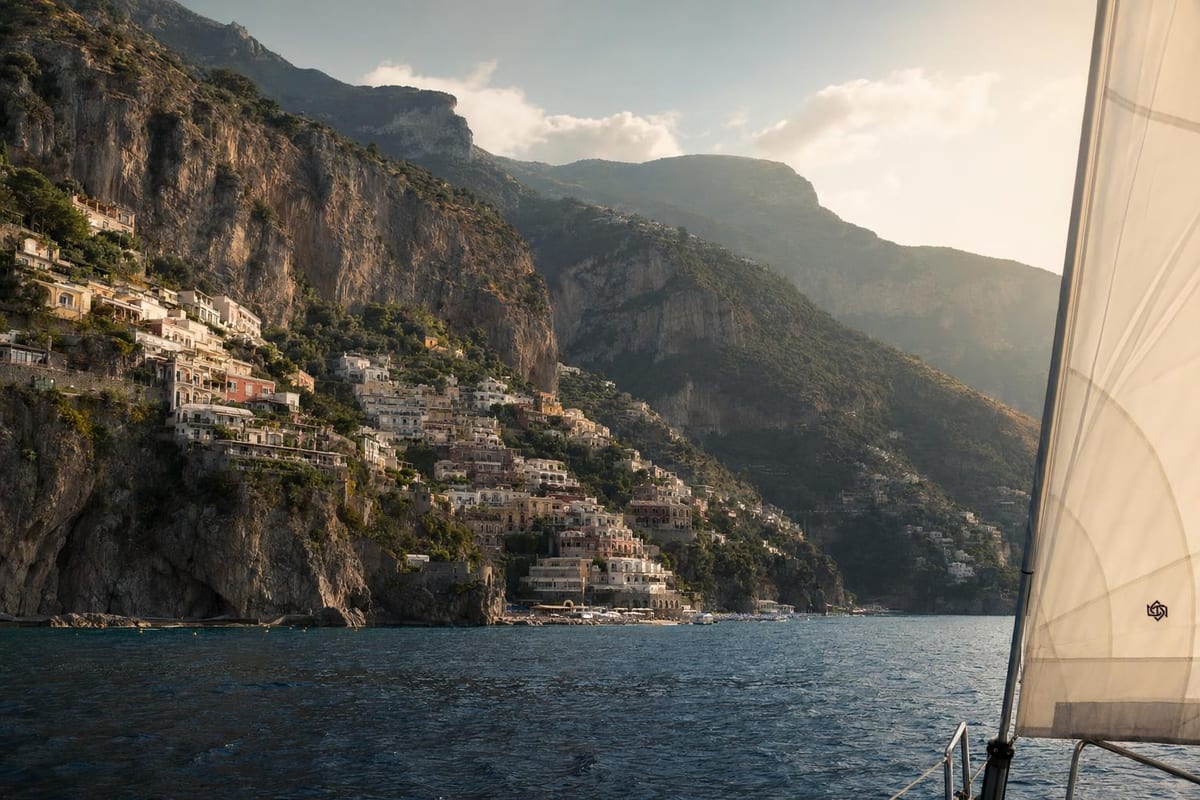
The town that falls into the sea. Anchor off Fornillo beach — the eastern cove, less ferry swell than Spiaggia Grande.

SW swell forecast >1m: go to Praiano instead, 3nm east. La Tagliata restaurant above Fornillo — book ahead in season.

Capri — Marina Grande

36nm

Island · Marina · Blue Grotto

The Faraglioni stacks and the Blue Grotto are the famous image. But the swim at Grotta Verde on the back of the island — calm days only, by tender — is the real discovery.

Marina Grande berth: book 1 month ahead in July/August. €350–600/night for a 50ft boat. Walk up to Anacapri for the views.

Paestum

30nm S

Ancient ruins · Greek temples

Three Greek temples standing in a field 2km from the coast. Built in the 6th century BC, still standing without scaffolding.

Anchor off Agropoli, 5nm south of the ruins. The museum contains the Tomb of the Diver — the most important Greek painting found in Italy.

Procida

50nm

Island · Fishing village

The island the tourist industry almost forgot. Corricella harbour — pastel houses descending to the water — is the photograph in every Italian film set in Naples.

Anchor in Chiaiolella bay or go alongside in Corricella. Best September.

Wind & seasons

When to come.

AprOff
MayPeak
JunPeak
JulGood
AugGood
SepPeak
OctGood
NovOff
DecOff
JanOff
FebOff
MarOff

The prevailing NW Tramontane makes the Amalfi coast a downwind first leg — the smart way to start. Southwesterly swell can make Positano untenable. May is the finest month before the summer crowds and ferry traffic.

Peak Good Off

Charter

Sail from Salerno.

From €4,450 per week, fully crewed.

EditorialMagazine