Lim Fjord
10nmFjord · Oysters
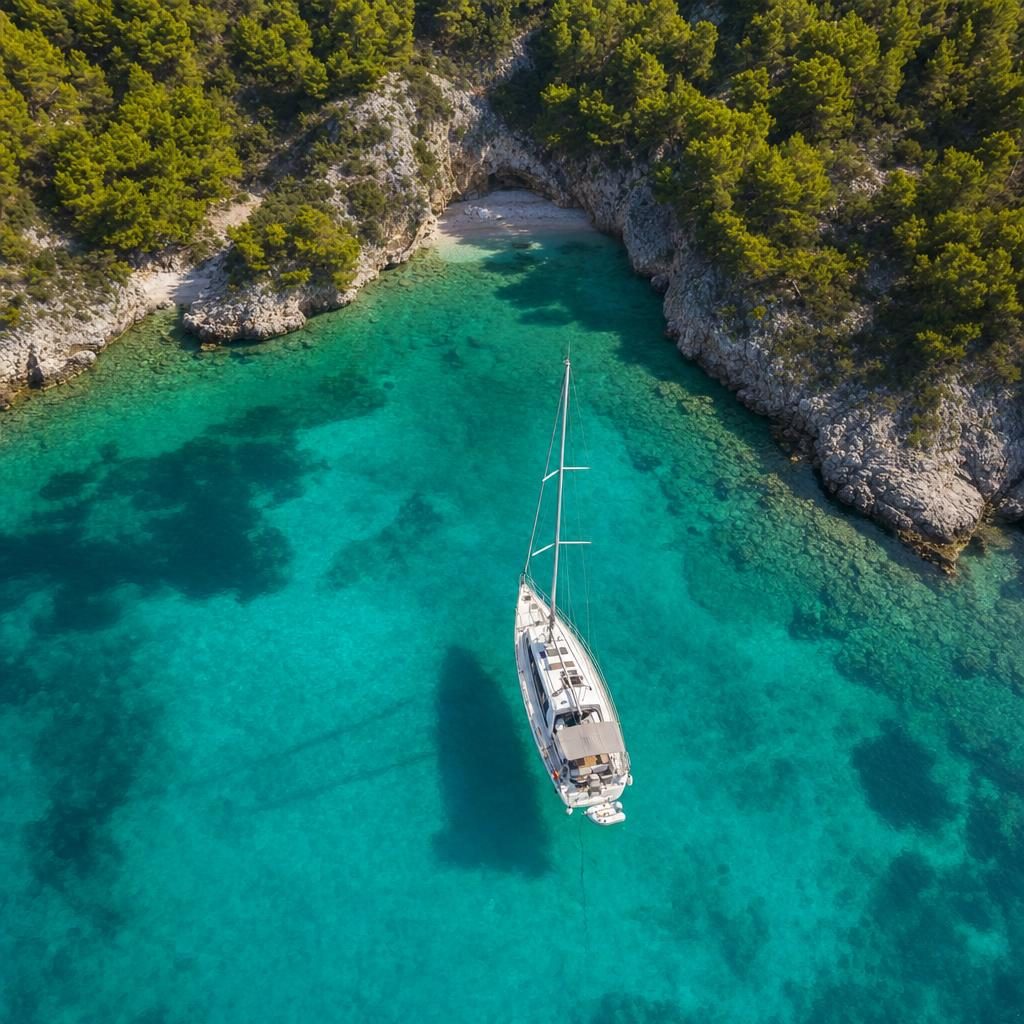
The Adriatic's only fjord — a 12km inland cut through limestone hills. Oyster and mussel farms anchored in rows.
Order oysters from the farm boats directly. The water is sheltered regardless of weather outside.
Istria · Croatia
Venetian campanile, truffle country, the quietest Adriatic base.
01
The Istrian peninsula is Italy disguised as Croatia: bilingual street signs, Venetian campaniles, truffle markets, and Roman amphitheatres twenty minutes by land. Rovinj's old town climbs a single hill to St Euphemia's church, the campanile a smaller copy of St Mark's in Venice. The fish market opens at six; the artists' quarter on Grisia is busy by ten.
02
Monte (one Michelin star) for the tasting menu. Maestral for the seafood pasta. La Puntuleina for sunset and the sea-view terrace. Istria is olive-oil and truffle country — the Motovun forest, an hour inland, produces white truffles that rival Alba's. Malvazija and Teran are the local wines; the producers are small and serious.
03
The Histri gave the peninsula its name; the Romans absorbed them in 178 BC. Venice ruled from 1283 to 1797. Most of what you see — the campaniles, the loggie, the merchant houses — is Venetian. Habsburg Austria followed, then Italy until 1947, then Yugoslavia, then Croatia. The Italian-speaking minority is still substantial.
04
Lone Bay and Mulini are the urban beaches — pebbles, pine shade, clear water. Punta Corrente (Zlatni Rt) park has secluded coves along a 3km coastal path. By boat: the Lim Fjord (10nm) for oysters straight from the farm boats; the Brijuni Islands (20nm) — Tito's private archipelago, now a national park with Roman quarries and safari animals.
05
Come in May or September. Istria empties in October and the truffle hunters move. The drive to Motovun, Grožnjan, and Hum (the smallest town in the world, population twenty) is the day Croatia doesn't put in the brochure. Tuesday is market day in Bale. Avoid the harbour-front restaurants — the good ones are two streets back.
Nearby
Fjord · Oysters
The Adriatic's only fjord — a 12km inland cut through limestone hills. Oyster and mussel farms anchored in rows.
Order oysters from the farm boats directly. The water is sheltered regardless of weather outside.
National park · History
Tito's private archipelago — foreign dignitaries came here for decades. Ancient Roman quarries, safari animals, and a marina inside the national park.
The estate is UNESCO-listed. Safari jeeps still run the same routes. Anchor in the south channel.
Town · UNESCO
A 6th-century Byzantine basilica in a perfectly intact Roman grid town. The mosaics rival Ravenna.
Walk the Decumanus — the main Roman street — still laid in 1st-century stone. Arrive by sea in the morning before the excursion boats.
Wind & seasons
The Bura can arrive without warning in spring. Istria sits at the top of the Adriatic where it funnels. Summer (Jun–Sep) is settled. May is extraordinary — wildflowers, empty marinas, full wildlife.